
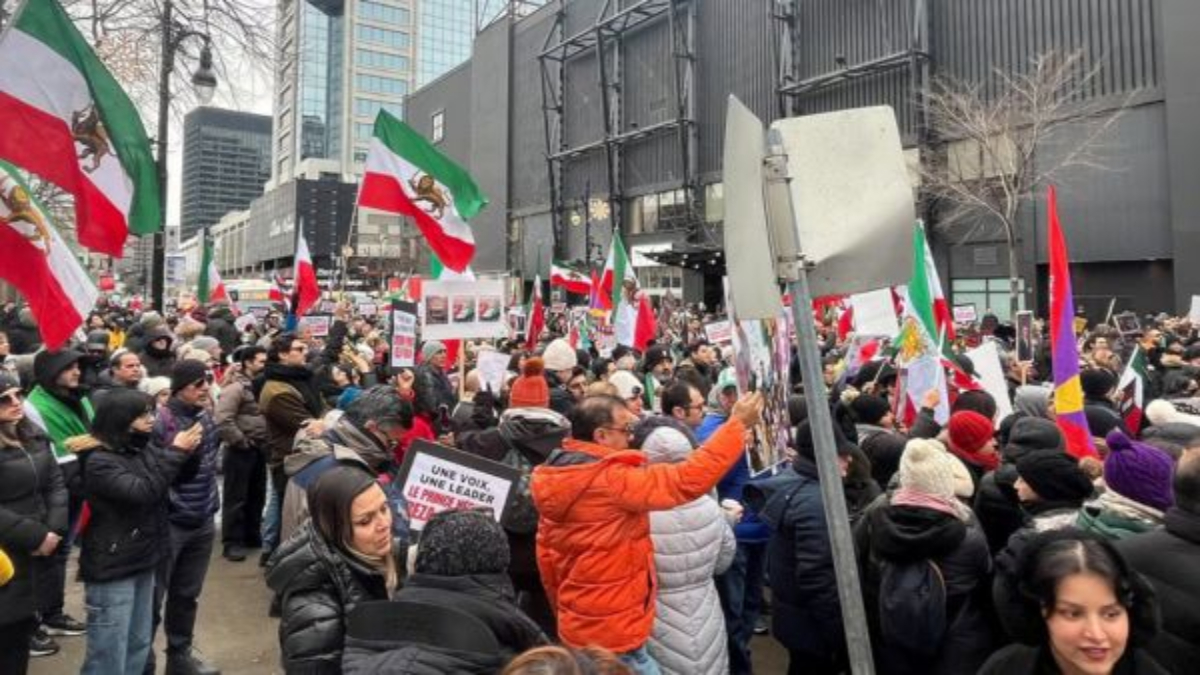
Iran faces massive nationwide protests erupting in late December 2025. Driven by crippling economic collapse hyperinflation exceeding 100%, mass unemployment, and food shortages amid sanctions and regime mismanagement. Now escalating into open calls for overthrowing Supreme Leader Ayatollah Ali Khamenei. The brutal crackdown has killed over 2,500 civilians, mostly youth, with security forces using live fire, mass arrests, and internet blackouts, spreading unrest to Kurdish and other minority regions.
US objectives toward Iran
The US under President Trump seeks regime change in Iran to neutralize its nuclear program, end proxy terrorism via groups like Hezbollah and Houthis, and secure Middle East dominance, viewing the protests as a golden opportunity to topple the “world’s top terror sponsor.” Trump announced 25% tariffs on nations trading with Iran (targeting China, India, Russia) to choke funding, while weighing cyberattacks, strikes on nuclear sites, or direct intervention if repression intensifies.
US objectives toward Iran center on stopping its nuclear weapons development, curbing support for militant groups like Hezbollah and the Houthis, and weakening Tehran’s regional power to protect allies like Israel and Saudi Arabia. The US aims to force regime change or compliance through harsh sanctions, tariffs on Iran’s trade partners, and potential military strikes on nuclear sites, viewing the current protests as leverage to topple Supreme Leader Khamenei.
Core goals of America
Prevent Iran from gaining atomic bombs by destroying enrichment facilities and hidden uranium stockpiles, as past US actions have already set back its program. Cut off billions in terror financing and proxy wars destabilizing the Middle East, while isolating Iran economically to spark internal collapse amid hyperinflation and shortages.
What Trump’s stance on Iran?
Trump publicly urges protesters to seize institutions, promising “help is on its way” and warning Iran against hangings or further killings, threatening “hell to pay” via military options. He claims prior US strikes crippled Iran’s nukes, demands negotiations on his terms, and eyes Khamenei’s ouster, blending “maximum pressure” sanctions with potential talks if Tehran yields politically.
Iran response on this
Tehran accuses Trump of manufacturing a “pretext for invasion,” threatens preemptive strikes on US bases in allied states like UAE and Saudi Arabia, and ended IAEA cooperation while hiding enriched uranium stocks. Khamenei labels US actions “bullying,” but channels remain open amid fears of all-out war.
How do US sanctions affect Iranians’ economy?
US sanctions on Iran severely harm ordinary Iranians by slashing oil revenues, which make up most of the government’s budget, leading to widespread economic collapse. This triggers hyperinflation over 100%, skyrocketing food and medicine prices, and mass unemployment, pushing millions into poverty where basics like meat or healthcare become unaffordable.
Rial currency devaluation halves savings’ value overnight, forcing families to cut meals or skip treatments as imports halt due to frozen banks and shipping blocks. Youth unemployment hits 30-40%, rural areas suffer most from food shortages, and even middle-class households now rely on aid, eroding living standards.
Sanctions limit medicine access despite exemptions, worsening patient outcomes, while factories idle without parts, firing workers and deepening recessions with GDP drops of 5-10% yearly. Protests in 2026 stem directly from these hardships, as subsidies vanish and inequality grows.