
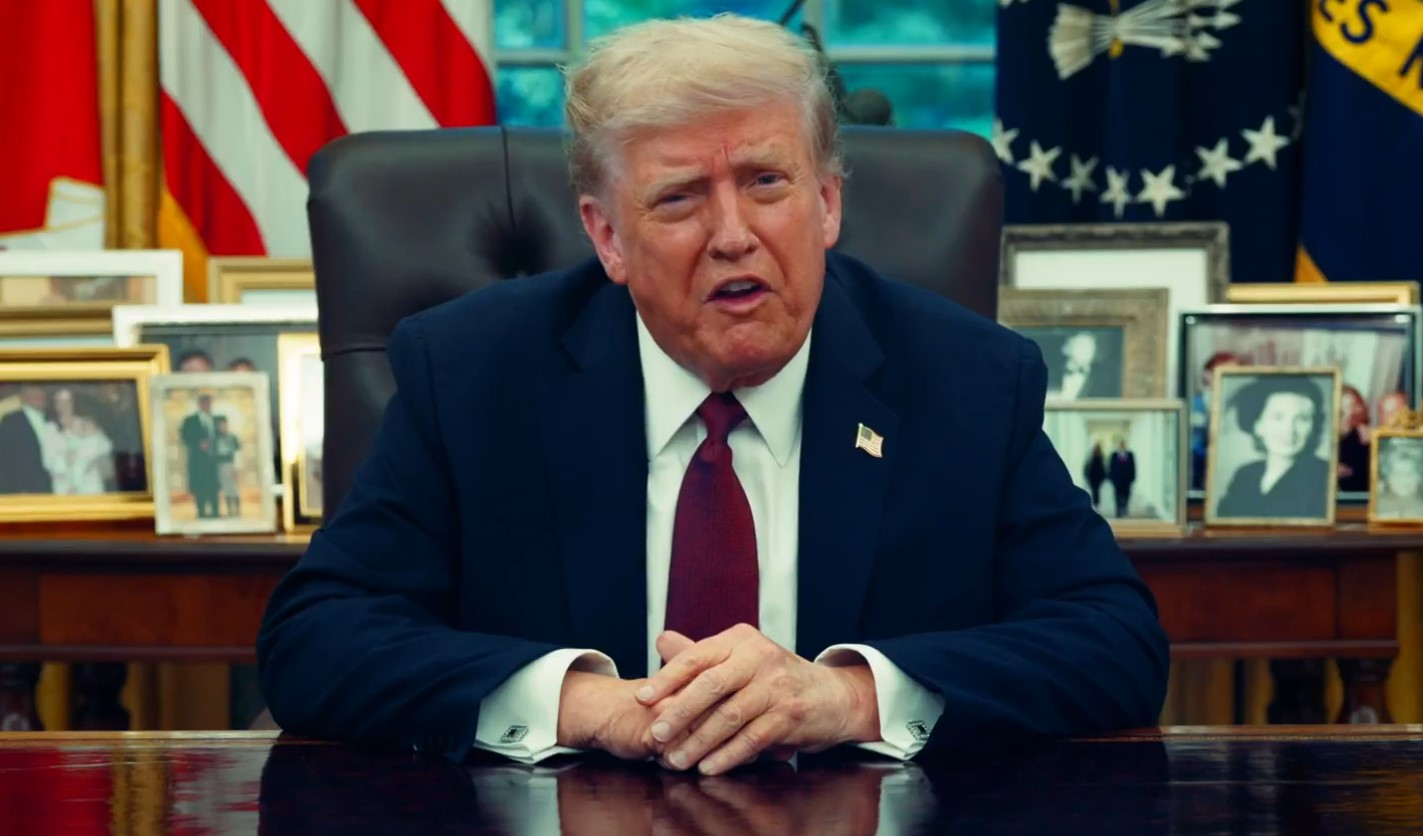
President Donald Trump finds himself walking a tightrope with China issuing threats of heavy tariffs in one breath and extending offers of friendship in the next. Despite his fiery rhetoric, Trump is compelled to sit across the negotiation table with Beijing. The reason is not mere diplomacy but China’s tight grip over critical minerals, manufacturing supply chains, and global logistics.
China’s rare earth monopoly: The roots of power
The story begins with rare earth elements the invisible drivers of modern technology. From cars and missiles to smartphones, none can function without these minerals. China controls roughly 70% of the world’s rare earth production and nearly 87% of its refining capacity. When Trump tightened export rules on AI chips, China responded by restricting rare earth supply, causing panic across US industries.
But rare earths are just the beginning. Under Deng Xiaoping’s strategic plan in the 1980s, China didn’t merely aim to build factories. It sought control over the entire supply chain- mining, refining, production, and export. Through massive state subsidies and overseas acquisitions from Chile to the Congo China built what experts now call the OPEC of critical minerals.
Lithium, Graphite, and Cobalt: The new gold
Beyond rare earths, China dominates the production and refining of lithium, graphite, and cobalt, crucial for EV batteries and renewable energy technologies.
- China refines about 58% of all lithium globally.
- It produces and processes over 90% of the world’s natural graphite.
- Its firms control roughly 80% of cobalt mining in the Democratic Republic of Congo.
These minerals are the “new oil” of the green technology era, making China the indispensable supplier in the clean energy economy.
The secret strength of China
China’s power doesn’t stop at raw materials. It extends deep into the invisible middle layers of industrial supply chains the intermediate chemicals and components that industries cannot easily replace.
From hydrofluoric acid used in semiconductor cleaning to pharmaceutical ingredients (APIs), China produces roughly 40% of global API materials. In solar manufacturing, it produces 85% of the essential backsheet glass, and in advanced wiring (used in defense and 5G), nearly 60% of fluoropolymer chemicals come from Chinese plants. These intermediate inputs are China’s hidden economic weapon, as they are difficult and expensive for other nations to replicate quickly.
Manufacturing supremacy: The made in China ecosystem
China’s mastery lies in turning raw materials into finished products. Its Made in China strategy, bolstered by state subsidies and cheap coal energy, turned the country into the world’s clean-tech factory.
By 2024:
- China produced 76% of global lithium-ion batteries.
- Controlled 97% of EV anodes and 90% of cathodes.
- Exported over 236 GW worth of solar panels enough to power hundreds of millions of homes.
This dominance has left the U.S. and Europe deeply dependent on Chinese green technology and components for their energy transitions.
The maritime advantage: Global logistics under China’s control
Beyond factories and mines, China commands the arteries of global trade. It builds 54% of the world’s ships and controls 36% of the global shipping fleet. In 2024, Chinese ports handled one-third of the world’s total container traffic with the Shanghai Port alone processing 50 million TEUs, the world’s largest volume.
Through the Belt and Road Initiative (BRI), China has embedded itself in the infrastructure of over 70 countries- ports, railways, highways, and pipelines stretching across Asia, Africa, and Europe. This network not only ensures access to raw materials but also projects China’s economic influence across continents.
The next frontier: Dual-use and emerging technologies
Beijing’s latest five-year plan focuses on dual-use technologies that blend commercial and military purposes- artificial intelligence, robotics, drones, genetic research, and advanced defense materials. Chinese companies like Inspur and SMIC now produce 60% of global AI server components, and DJI drones dominate 70% of the global market. The nation also leads in genomics, with BGI Genomics manufacturing 60% of global gene sequencing equipment. China’s technological leadership is fast transforming into a strategic advantage in future wars of data, AI, and biotech.
The world’s dependence and dilemma
Western nations face an uncomfortable reality: decoupling from China is nearly impossible in the short term. Rebuilding entire supply chains, retraining engineers, and reconstructing infrastructure could take decades. Even countries rich in minerals lack the refining and manufacturing capacity that China has perfected over three decades.
Recognizing this, President Trump after years of confrontation appears ready to strike a deal. A partnership, however uneasy, seems inevitable because China’s integrated control over minerals, manufacturing, and logistics makes it an unavoidable global partner.