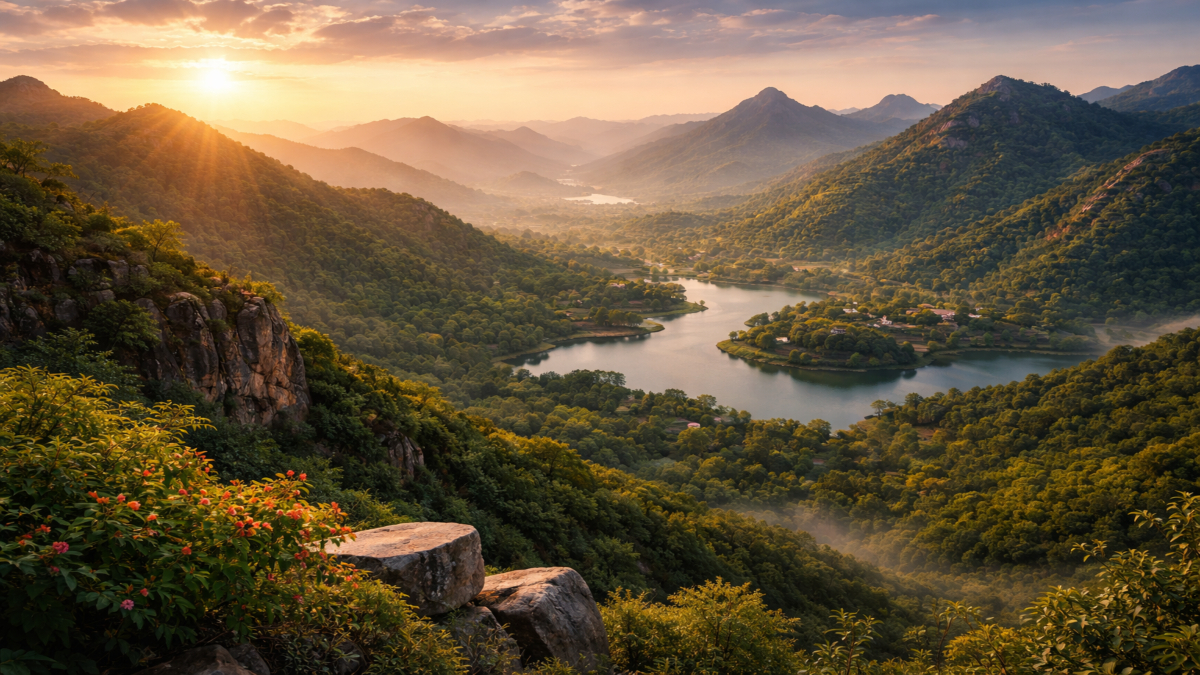
The Aravalli mountain range, one of the world’s oldest geological formations stretching from Delhi to Gujarat, faces an existential threat from proposed government rules that could strip protection from nearly 90% of its hills. Environmentalists warn that this shift, combined with ongoing illegal mining, endangers northern India’s green lungs, vital for groundwater recharge and pollution control.
Ecological lifeline in peril
The Aravallis serve as a critical barrier against desertification, hosting tiger reserves like Sariska and sacred sites linked to ancient sages and epics. Satellite imagery even reveals the range’s shape resembling the sacred “Om” symbol, underscoring its spiritual and biodiversity value. Yet, relentless mining in areas like Alwar district has scarred the landscape, with heavy machinery and night-time operations persisting despite Supreme Court bans within a one-km radius.
Supreme court steps in
In November 2025, the Supreme Court accepted a uniform definition for Aravalli hills in the ongoing Godavarman forest case, mandating scientific mapping and halting new mining leases until a comprehensive plan is ready. The ruling prohibits extraction in core ecological zones like protected areas and tiger corridors, while allowing limited sustainable mining elsewhere under strict safeguards. This came after years of ambiguity enabled illegal activities across Rajasthan, Haryana, Delhi, and Gujarat.
Controversial new definition
The Ministry of Environment, Forest and Climate Change’s draft proposes protecting only hills over 100 meters tall, scrapping the 2010 Forest Survey of India criteria of 115-meter height, 3-degree slope, and buffer zones. In Rajasthan alone, this would exclude 90% of 12,081 hills above 20 meters, opening vast areas to exploitation. Critics like expert LK Sharma decry the height measurement from hill base rather than sea level, predicting massive ecological devastation.
Mining mayhem and local backlash
Illegal mining continues unabated, fueling organized crime, health issues like respiratory diseases in villages like Haryana’s Rajawas, and deforestation blamed for 70% of land degradation. Villagers and activists oppose new leases, citing past violations and dust pollution, while petitions urge the court to reconsider its judgment. Initiatives like the Aravalli Green Wall Project aim to restore via afforestation but face funding and invasive species hurdles.