IndiGo’s ongoing meltdown is not just about one airline’s mismanagement; it is the logical outcome of a state that let a single private player corner nearly two-thirds of the market and then acted surprised when the system showed how fragile that concentration really is.
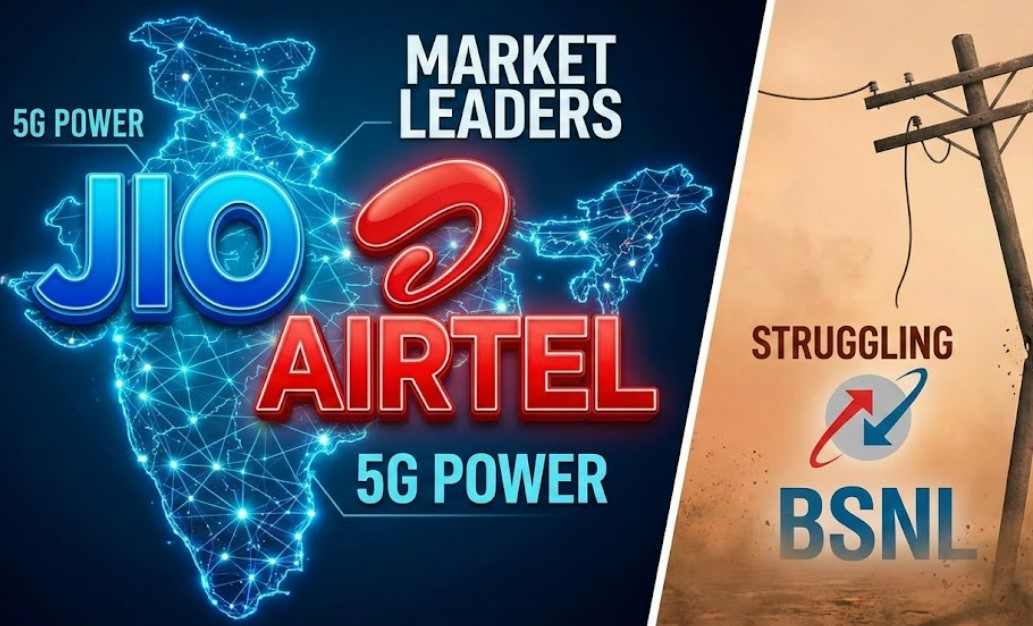
The same script has quietly been playing out in telecom, where Jio and Airtel dominate, Vodafone Idea is on life support, and BSNL-MTNL are kept alive more as budget entries than as serious public alternatives.
From IndiGo to “IndiaGo”
Civil aviation in India today is effectively a duopoly with one oversized giant at the centre.
IndiGo’s domestic market share has hovered around 63-65% through 2024-25, even touching a record 63.6% in November 2024 as it carried over 90 lakh passengers in a single month.
Over the past decade, its passenger share has doubled from about 32% in 2014 to roughly 65% now, while several competitors have collapsed or become marginal, leaving the system heavily dependent on one carrier’s schedule, systems and workforce.
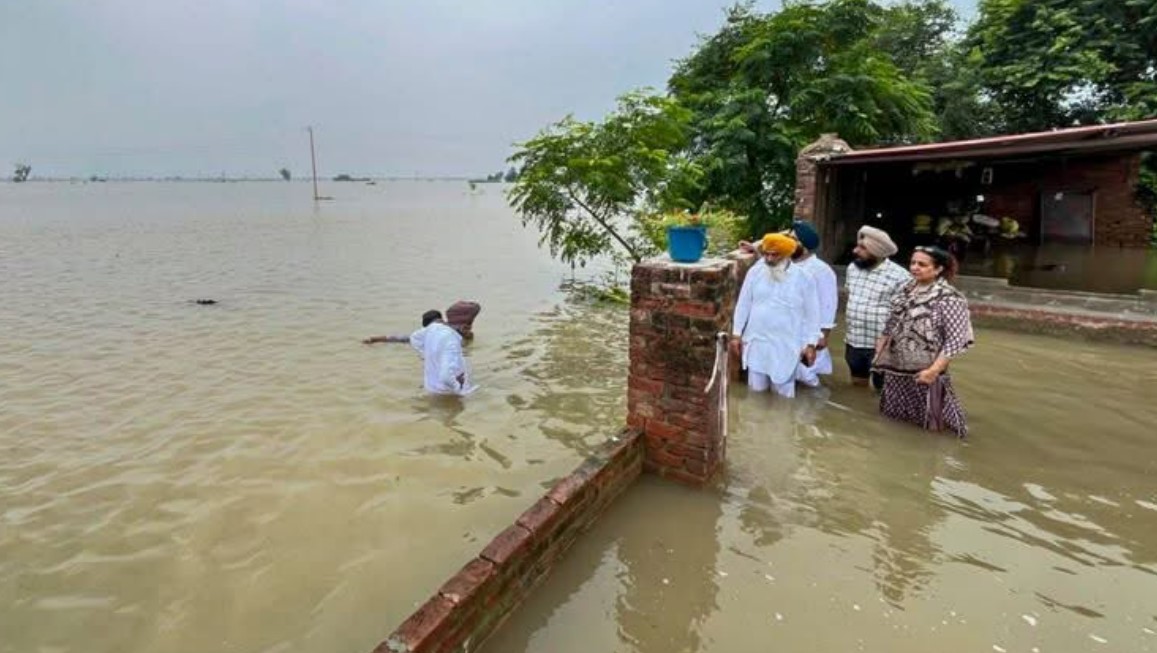
That dependence turned into a national crisis the moment IndiGo’s operations began to crack: mass cancellations, stranded passengers, and the aviation regulator scrambling after the damage was already done. Aviation became a live demonstration of what happens when the state mistakes “more flights” for “healthy competition” and refuses to ask hard questions about market power until the lights go out.
Telecom: Jio-Airtel as the new IndiGo
Now look at wireless telecom, the basic infrastructure on which everything from UPI to OTT to online education rests.
TRAI data for the end of 2024 show Jio with about 40.4% wireless subscriber market share and Airtel with 33.5%, together controlling roughly three-fourths of the mobile market. Vodafone Idea is down to around 18%, unable to invest meaningfully, while BSNL is stuck below 8%, with its share eroding even after repeated “revival” headlines.
In wireless broadband, the picture is even starker: as of October 2025, Jio alone has nearly 495 million broadband subscribers and Airtel about 303 million, with Vi at 127 million and BSNL under 30 million; Jio and Airtel together command well over 80% of this high-value segment.
This is not a vibrant four-player market, it is a tight oligopoly, with one public operator reduced to a token presence and one private player trapped in a debt spiral.
The state’s selective activism
The government’s behaviour in the two sectors reveals a troubling pattern of selective activism.
In aviation, regulators allowed IndiGo’s share to rise past 60% without using any serious competition or capacity-planning tools, even as the airline became, in effect, “too big to fail or regulate”.
Correctives came only after chaos hit the front pages, sacking a few DGCA officials, issuing show-cause notices to the airline, and promising stricter oversight, none of which address the structural risk of one carrier controlling most domestic capacity.
In telecom, the state has done the opposite of benign neglect with BSNL-MTNL: it has thrown money at the problem without a coherent vision of what role a public telecom should play in a Jio–Airtel world.
Between 2019 and 2023, the Centre has announced three revival packages for BSNL-MTNL totalling over Rs 3.23 lakh crore, around Rs 70,000 crore in 2019, Rs 1.64 lakh crore in 2022 and a third package of about Rs 89,000 crore in 2023, primarily around spectrum, debt restructuring and VRS. Yet, despite this massive fiscal commitment, BSNL’s market share has not recovered; in December 2024 it actually lost over 3.2 lakh mobile subscribers even as Jio and Airtel kept adding users.
Public money, private power
The contrast could not be sharper: public money is being poured in to keep a state operator breathing, while real market power keeps consolidating with a couple of private giants.
The India telecom MNO market is now so concentrated that three players, Jio, Airtel and Vi, are estimated to hold over 90% combined share, with Jio using its scale to undercut rivals and cross-sell digital services, and Airtel focusing on premium customers and B2B.
BSNL-MTNL, after thousands of crores and multiple cabinet notes, still struggle to even complete a timely 4G rollout; a flagship 4G contract to TCS worth about Rs 15,000 crore was delayed by at least two years due to proof-of-concept and negotiation issues.
In aviation, the government insists IndiGo is a purely private success story.
But when an airline with over 60% share faces a deep operational crisis and analysts talk of potential double-digit revenue slumps and heavy profit hits, the state cannot pretend it is just another company. As with banks once deemed “too big to fail”, the taxpayer will end up paying, if not in bailouts, then in fewer choices, higher fares, and an economy slowed by transport bottlenecks.