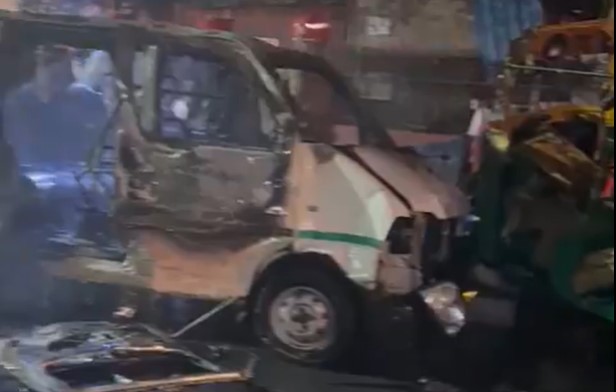
The deadly car explosion near Delhi’s iconic Red Fort on November 10 has sent shockwaves across the nation.
Investigators have revealed a chilling plot involving a terror module linked to Pakistan-based groups, operating through encrypted apps and medical professionals from a Faridabad university, with plans to carry out a series of coordinated bombings targeting key locations in Delhi on December 6, coinciding with the Babri Masjid anniversary.
Here are the latest updates in 10 key points:
1. Use of Encrypted Apps for Planning
The terror module used ultra-secure encrypted messaging apps “Session” and “Threema” for planning and coordination, making it extremely challenging for investigators to track their communications.
2. Foreign Handler Coordination
The main accused were in direct contact with a handler codenamed “Ukasa,” who was traced to Ankara, Turkey. This handler coordinated movements, funding, and radicalisation from abroad using the Session app.
3. ‘Doctor Module’ of Al-Falah University
The central suspects, Dr Umar Mohammad (alias Dr Umar un Nabi), Dr Muzammil Shakeel, and Dr Shaheen Saeed, were medical professionals from Al-Falah University, Faridabad. They set up a private Threema server to securely share plans, maps, and layouts relating to the attack.
4. Amit Shah’s Statement
Union Home Minister Amit Shah on Thursday said that those responsible for the recent Delhi bomb blast will be given the “strictest possible punishment”. He added that the action will send a strong message to the world that no one should ever dare to attack India again.
5. Seizure of Cars and Explosives
Investigators found and seized three other cars (Maruti Brezza, Swift Dzire, Ford EcoSport) intended for use in simultaneous attacks. Raids uncovered nearly 2,900 kg of ammonium nitrate and other bomb-making materials in Faridabad.
6. Massive Serial Bombing Plan Tied to Babri Masjid Anniversary
The suspects aimed to detonate up to 32 cars with explosives across Delhi and the NCR on December 6, coinciding with the anniversary of the Babri Masjid demolition. The original scheme targeted six prominent locations in Delhi, with operations divided into carefully planned reconnaissance, assembly, and execution phases.
7. Jaish-e-Mohammad and Lashkar Links
Investigation agencies have confirmed a “clear Jaish-e-Mohammad (JeM) angle” through Telegram and Session chats, and are examining links to Pakistan-based groups, with Lashkar-e-Taiba affiliations also under scrutiny.
8. Technology and Operational Secrecy
The use of Threema, which requires neither phone numbers nor emails, ensured near total anonymity, enabling the suspects to share details, schedule tasks, and coordinate without detection. Deep examination of recovered digital devices is ongoing.
9. Arrests and Evidence Recovery
Two main suspects, Dr Muzammil Shakeel and Dr Shaheen Saeed, are in police custody. Diaries seized from their hostel contain coded references to “operation,” strongly linking them to the plot. DNA analysis confirmed Dr Umar as the blast’s vehicle driver.
10. Immediate and Nationwide Security Response
Central agencies (NIA, Delhi Police, NSG) are probing the blast as a terror incident under UAPA. Counter-terror measures have been heightened nationwide, with intelligence agencies on alert for possible additional modules or “sleeper cells.” India’s leadership, including Home Minister Amit Shah, has vowed swift and strict justice.